Torneos moderniza su playout y garantiza la continuidad operativa con Imagine
Con sede en Buenos Aires, Torneos cuenta con más de 40 años de experiencia en la producción de contenido deportivo en toda Latinoamérica, generando más de 19.000 horas de programación anuales para las principales cadenas de la región.
Su portfolio incluye la producción de eventos de primer nivel como la CONMEBOL Libertadores y la CONMEBOL Sudamericana, además de ligas domésticas de Argentina, Colombia y Perú, partidos de la Selección Argentina, eliminatorias de los mundiales y muchos otros eventos.
La compañía también opera la red DSports, que transmite deportes en vivo y programación relacionada a través de canales lineales y plataformas digitales. La señal deportiva de referencia en Argentina brindó cobertura en vivo del Mundial FIFA 2026, con programas de pre y post partido, highlights y repeticiones en sus canales lineales y en la plataforma de streaming DGO.
| 40 | 19.000 | 10 |
| Años de experiencia produciendo contenido deportivo | Horas de programación emitidas al año | Copas del Mundo FIFA |
El desafío
Durante años Torneos construyó su infraestructura de broadcast sobre tecnología confiable y probada. Pero a medida que los sistemas centrales de playout, ingest y almacenamiento comenzaron a quedar fuera de los ciclos de soporte de los fabricantes, y las exigencias operativas del broadcast deportivo moderno siguieron aumentando, una renovación tecnológica de fondo se volvió imprescindible.
Con 10 canales en vivo al aire para gestionar, la confiabilidad y la simplicidad operativa eran requisitos innegociables. Torneos buscaba soluciones de playout resilientes que, idealmente, les permitieran mantener sus flujos de trabajo de automatización ya conocidos. Al mismo tiempo, la organización tenía en mente el futuro: necesitaban una plataforma capaz de evolucionar hacia la producción basada en IP y la distribución de contenido UHD cuando llegara el momento, sin imponer un reemplazo costoso y total de su infraestructura SDI existente.
El desafío era renovar la infraestructura de broadcast de una manera que redujera el riesgo, preservara los flujos de trabajo de confianza y ofreciera un camino claro hacia una evolución gradual —todo esto sin dejar de cumplir con las altas exigencias de confiabilidad del broadcast deportivo en vivo.
La solución
Con una preferencia consolidada por componentes discretos e independientemente bypasables para garantizar la resiliencia en cada punto de la cadena de señal, Torneos realizó una evaluación exhaustiva del mercado y pruebas rigurosas antes de seleccionar la plataforma de playout integrado Versio de Imagine como base de su operación de broadcast modernizada.
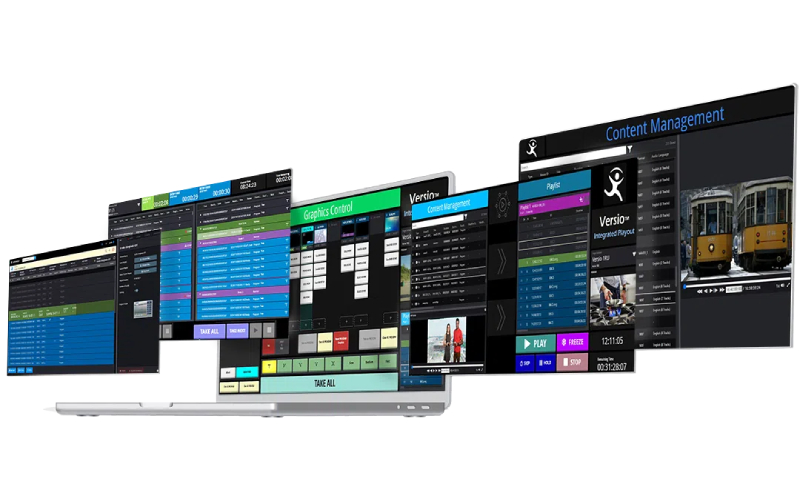
Versio, completamente basado en software, ofrece una solución robusta y turnkey —desde ingest y gestión de activos de medios hasta playout, master control y gráficos. La plataforma está disponible como servidor on-prem o desplegable en entornos cloud, y soporta todos los formatos, desde HD-SDI y SMPTE ST 2110 hasta MPEG-2 transport streams. En Torneos, los servidores Versio de canal dual soportan 12 canales principales y 12 canales de respaldo completamente redundantes, cada uno integrando playout, branding, switching de master control, control de loudness, inserción SCTE y procesamiento de audio con I/O SDI.
La actualización de la capa de automatización ADC existente introdujo redundancia de playlist que simplifica de manera fundamental la operación al aire. Con la automatización ADC, cada playlist se gestiona desde una interfaz unificada, lo que permite a los operadores controlar el switching en vivo, el playout basado en archivos y el branding. La superficie intuitiva de master control de Versio permite previsualizar gráficos antes del aire y realizar cambios rápidos entre fuentes preconfiguradas, respaldando operaciones eficientes en las 12 posiciones de control al aire. Este enfoque integrado brinda a los operadores una experiencia de usuario consistente y un flujo de trabajo optimizado desde la creación hasta el aire, manteniendo al mismo tiempo la flexibilidad requerida para la producción deportiva en vivo.
Para garantizar la transmisión continua al aire, los dispositivos Selenio Network Processor (SNP) de Imagine, configurados con la función de cambio automático (ACO), utilizan métricas inteligentes de análisis de contenido para determinar el estado de cada señal —en términos de presencia y calidad de video, presencia de subtítulos, niveles de audio y más— y brindan failover transparente entre rutas de señal.
Todos los servidores del entorno renovado están conectados al almacenamiento compartido de alta disponibilidad IOX Express de Imagine, que permite escalar fácilmente la capacidad o el ancho de banda sin necesidad de sacar el sistema del aire —ideal para entornos de respuesta rápida como el deportivo.
«Nuestro objetivo era modernizar las operaciones de playout sin afectar los flujos de trabajo en los que nuestros equipos confían. Apoyándonos en nuestra larga y sólida relación con Imagine, pudimos lograr exactamente eso —y ahora contamos con un camino claro hacia adelante a medida que nuestras necesidades evolucionan’, explicó Maximiliano Cabrera, CEO de Torneos.

El resultado
La implementación de la solución de Imagine entregó exactamente lo que Torneos se propuso lograr: un entorno de playout moderno y confiable que preservó los flujos de trabajo existentes y, al mismo tiempo, abrió las puertas a la próxima generación de operaciones de broadcast.
Al combinar el playout integrado Versio —probado en la industria— con la plataforma de automatización ADC que el equipo ya conocía, la solución eliminó la curva de aprendizaje que habitualmente acompaña a las renovaciones de infraestructura. Los operadores ahora gestionan el switching de video, la inserción de branding y el control de playlist desde una única interfaz unificada —un cambio significativo para equipos que antes debían navegar entre distintas aplicaciones durante la transmisión en vivo. Controlar tanto los canales principales como los de respaldo desde una sola playlist le da a los equipos mayor confianza y consistencia en cada jornada de transmisión.
La infraestructura modernizada también hizo frente a la dura realidad del equipamiento obsoleto. Reemplazar los servidores y el almacenamiento al final de su vida útil garantiza la continuidad operativa para los próximos años, mientras que la nueva arquitectura reduce de manera significativa el consumo de energía. Y cuando Torneos esté listo para dar el siguiente paso —ya sea la transición a UHD, migrar el playout a SMPTE ST 2110, o expandir la capacidad de canales— la base ya está instalada para avanzar rápidamente, a su propio ritmo.
Para profundizar en cómo modernizar sus operaciones de playout, explore el «Playbook Híbrido para Broadcast» de Imagine Communications.