
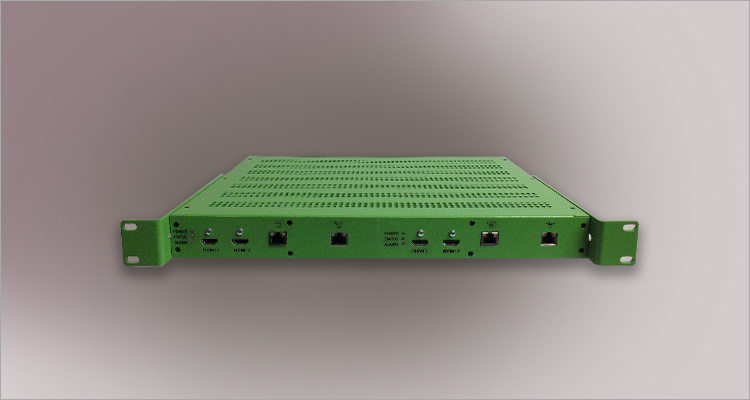
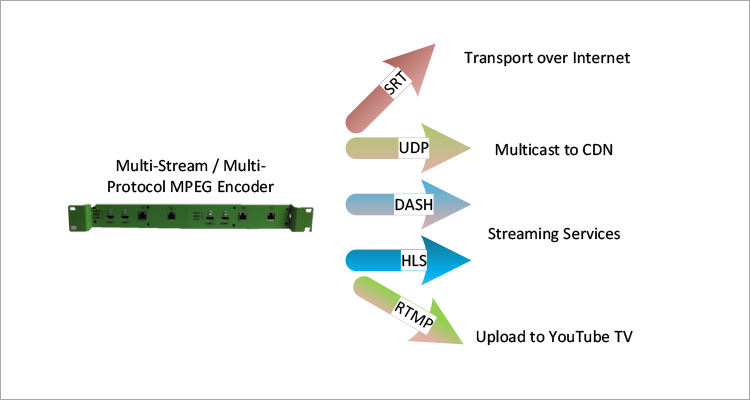
The MPEG2/H.264 multi-protocol encoder described here is a versatile and high-performance device designed to handle up to 4 HD video channels within a compact 1 R/U rack space. It supports multiple output formats, including SRT (Secure Reliable Transport), UDP (User Datagram Protocol), HLS (HTTP Live Streaming), and DASH (Dynamic Adaptive Streaming over HTTP), making it suitable for various streaming and broadcasting applications.
The Value of High-Density Encoders in Video Data Centers
As video streaming over IP networks replaces traditional cable or IPTV delivered services, the number of delivered service channels will increase. The traditional headend is evolving into a video streaming data center, and the MSO a high bandwidth ISP. In video data centers, real estate for equipment is limited. High density multi-protocol encoders present a good choice because they significantly reduce the amount of physical space required for video processing equipment. By consolidating multiple channels into a single 1 R/U unit, these encoders allow for more efficient use of rack space, which is particularly important in environments where space is at a premium. This efficiency translates into lower operational costs, as fewer racks, power supplies, and cooling systems are needed to maintain the same level of processing capability. The multi-protocol capabilities allow more output functionality within the same platform. More versatility per given unit of rack space is key in modern video datacenters.
Integration into Content Delivery Networks (CDN) for Streaming Distribution
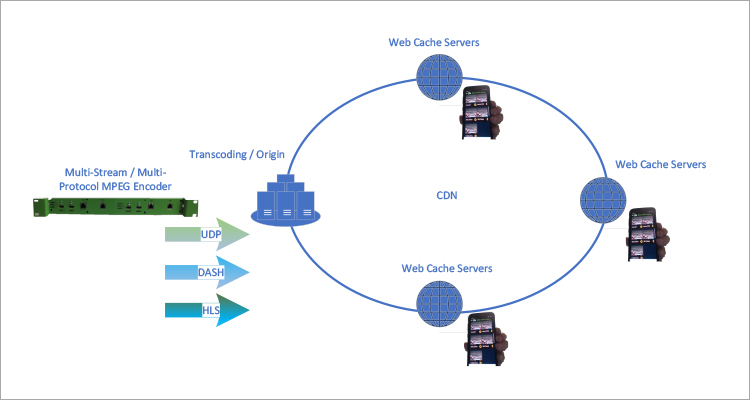
High-density multi-protocol encoders play a vital role in the integration of video content into CDNs for streaming distribution. They prepare the video content in formats such as HLS and DASH, which are essential for adaptive streaming. This allows the content to be efficiently delivered to a wide range of devices over the Internet, with the CDN managing the distribution to ensure optimal performance and reliability. The encoder’s ability to handle multiple channels simultaneously enhances the capacity to distribute diverse content streams to various end-users, making it a key component in large-scale streaming operations.
High-Density Encoders in PEG and Locally Originated Content Transport
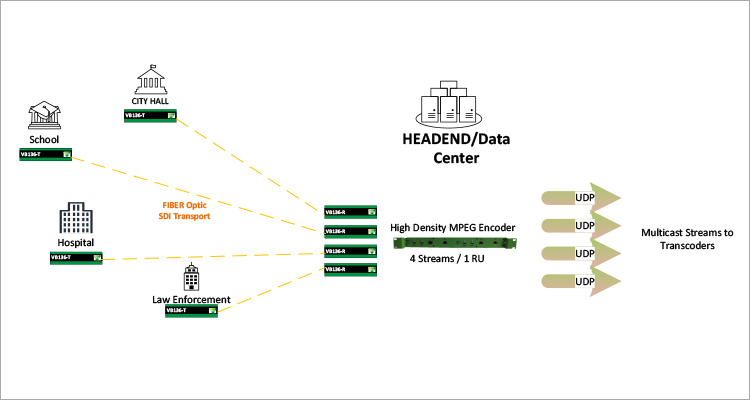
In applications involving PEG (Public, Educational, and Government) or other locally originated content, high-density encoders are essential for transporting multiple channels of content from various local sources to the data center. These encoders streamline the process by enabling the simultaneous encoding and transport of multiple video feeds in a single unit, reducing the need for multiple devices and simplifying the infrastructure. This is particularly beneficial for local broadcasters or institutions that need to manage several channels of content with limited space and resources.
SRT and Its Role in Infrastructure Savings
SRT (Secure Reliable Transport) is a protocol designed to facilitate the transport of high-quality video over the Internet, even in unreliable network conditions. By using SRT, video content can be securely and reliably transmitted from the point of origination to the data center without the need for expensive dedicated network infrastructure. This reduces the reliance on traditional satellite or leased lines, leading to significant cost savings in both capital and operational expenditures. SRT’s ability to adapt to varying network conditions while maintaining low latency ensures that video content is delivered with minimal disruptions, making it an ideal solution for transporting high-quality video, from a remote location to the data center, over the public Internet.
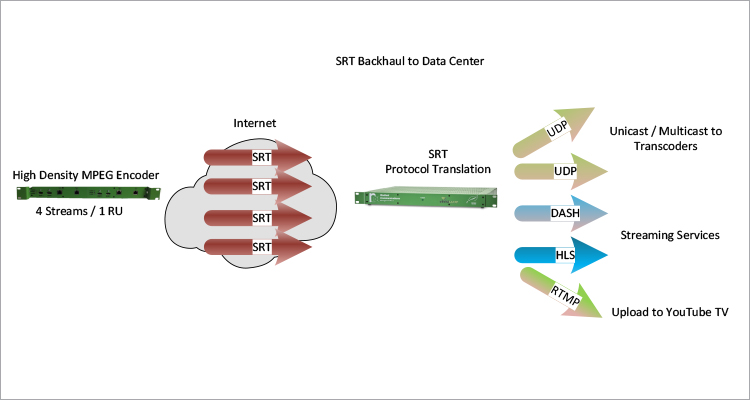
In summary, high-density MPEG2/H.264 multi-protocol encoders are pivotal in modern video data centers for maximizing space efficiency, facilitating content distribution via CDNs, and supporting the transport of local content to centralized facilities. The use of SRT further enhances these capabilities by leveraging the Internet for cost-effective, reliable video transport.