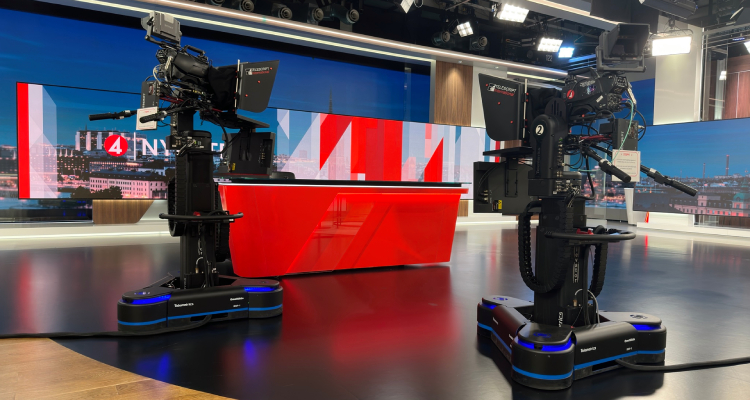
With increasing regularity, production studios with manual camera operators are looking to make the move to robotic camera control systems. They are more efficient, consistent and cost-effective than manning a studio with three or four operators. With robotic camera systems, you only need one operator.
It’s also important to understand that robotic camera systems can be built out in phases, which keeps cost down and allows your staff to become familiar with how robotics systems work. Some might start with a single control panel and three Telemetrics RoboEye cameras or S5 series Pan/tilt heads on existing tripods. Again, baby steps on the way to full studio production efficiency.
We have a German broadcast customer that wanted to go robotic but were concerned about how it would change their established workflows. They started with one OmniGlide studio rover and two fixed Pan/Tilt heads—in this case the PT-LP-S5—with teleprompters on tripods. The technology brought many operational benefits and within a year they added Televator elevating columns and two more rovers for added production values. Taking a phase approach with the technology helped them get the most out of the systems as they learned how to operate them.
We typically recommend that any new customer start off with a system that will give them a fast return on investment. That’s typically three cameras and a control panel. You don’t need to go full-blown robotics throughout the studio right away. Maybe you start with three heads on existing tripods and a control panel, which saves money and allows you to start small and use the resources already in place. Then, once the staff is familiar with how things work, you might add a Televator or a TG4/5 robotic camera track system. This provides more dynamic camera movement and creative options in how shots are composed and adds production values to your newscast that could not be achieved before.
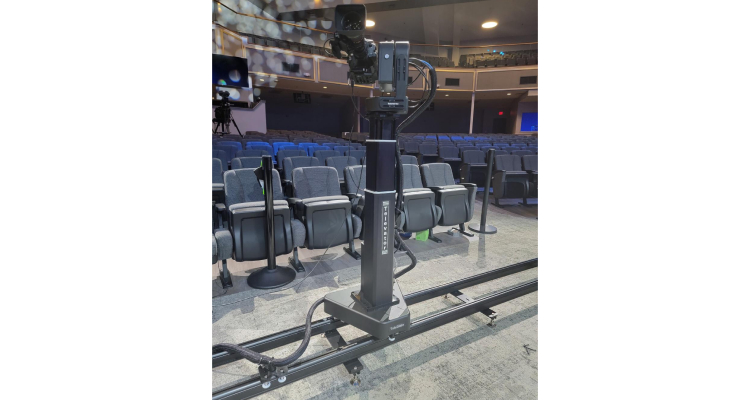
With robotics you can also get jib-type moves with our TG-4/5 track systems. Previously, a customer might have had two people manning a manual job in their studio. With one Telemetrics track and trolley system, you could have the same jib-like coverage, with better performance and only one person required to operate it. For some installations we’ve actually installed three OmniGlide rovers or pan/tilts on Televators on one camera track. No other vendor in the industry can say that.
Here at Telemetrics we feel a modular approach is the best way to start your robotic camera journey. A phased installation is best for many people and Telemetrics is the only vendor that allows this. Other camera robotics make you make a whole systems investment.
With careful planning, comprehensive training and a focus on flexibility and safety, robotic camera systems can enhance production capabilities and efficiency in broadcast studios. Taking a phased approach to implementation will ensure success and fit your budget perfectly.
By Michael Cuomo, Vice President, Telemetrics, inc.